It is just two months since I decided to begin a systematic enquiry into the history of the Andalusian donkey. Such a short time but I am immersed in three different time periods. The 1980s when some people began to notice the Andalusian breed was in danger of extinction. Then my decision to go back to basics and explore the methodology of existing donkey zoo-archaeology and related disciplines, to learn how to organise a donkey study. Finally, I have made a tentative beginning exploring a bibliography of farming methods in Al Andalus, because here I think is the real area of the biggest questions regarding animal husbandry leading to the Andalusian donkey.
This is a huge amount of work in just two months. As I said to Pepe Selfa, Vice President of ASNOPRA, just two weeks ago here on my donkey field, I want to do this study for three reasons:
- because I have the time, as a retired geography teacher;
- I have the motivation, with my donkey Matilde, a slightly under-height (at 1.25 m) but nevertheless noble looking burra andaluza, and I want to do my utmost to help preserve her breed of donkeys;
- and an academic track record in interdisciplinary work which this study needs. (My original masters degree at the Central School of Art in London in the 1980s crossed seven different academic disciplines!)
Today, a first-time reader of this blog – and existing respected contributor to discussion on social media of the Andalusian breed – contacted me to say he appreciated these pages, but I should correct the errors about the Andalusian breed that I have put here. That was all.
I was left with some wonderfully mixed thoughts and feelings! All of them positive. There is an audience out there beginning to notice this blog and the Andalusian study I am engaged in. That’s good: I have otherwise had no indication my work is of any interest! Second point: “I should correct the errors about the Andalusian breed” that I have put here. Absolutely I should! (If the message on Facebook had suggested which errors I might address, that would have been even better!) The main point of positive outcome is this: if people can start to contribute to discussion on the comments here, we can begin to develop a dialogue about some of the important missing information.
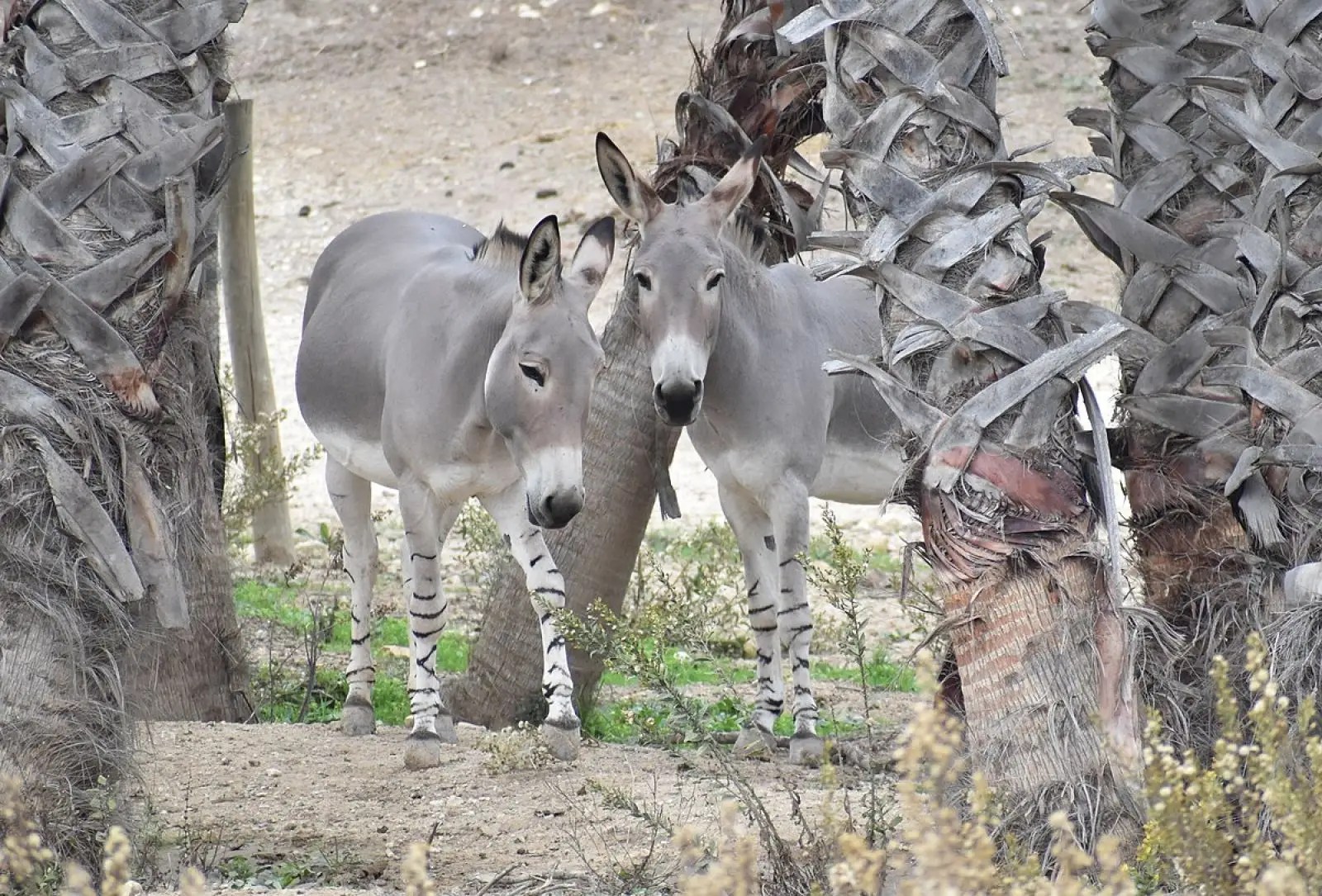
Between the ancient African wild ass and its domestication in Somalia, Ethiopia, Egypt, etc. and the existing Andalusian donkey breed lies several thousand years of development and animal husbandry. This takes us through the Levant, Mesopotamia, back through north Africa – Carthage, the Phoenicians, the Iberians, etc. – and eventually we must examine the Islamic kingdoms of Al Andalus and their animal husbandry, all spelled out in a vast bibliography of agricultural and technological practices. The study is interdisciplinary. It involves genetics, archaeology, history, geography, art-history, and in its last stage, social and economic change – the disappearance of the Andalusian donkey with technological change and socio-economic change.

I have been invited to give a twenty-minute talk in March at the gathering of ASNOPRA for the 2026 Campeonato Nacional at the Veterinary Faculty of Cordoba University. I am considering my response. If I do agree to present a talk, it will be titled “Toward a History of the Andalusian Donkey Breed. Can we discover the true history?”
What do I mean by this? Everywhere you look – from ASNOPRA, to Spanish television documentary programmes about the Andalusian donkey – you see the figure quoted, of “3000 years” as the supposed history of a breed that goes back three millennia. I do not doubt it. I simply want to see what evidence is being quoted. I have not seen it yet. It will be there – somewhere – and I want to know what it is!
*Please comment if you have some of the evidence that will help. Or maybe someone has already written the complete and exhaustive history of the Andalusian donkey, but I failed to notice it in my research so far! Tell me. It will save me several years of work!
