
The Road Less Travelled was a bestselling spiritual/psychology book in the 1980s, in what we might call the category of ‘popular spirituality’. I remember relying upon it heavily while leading a Liverpool parish weekend in a wet hillside retreat house in North Wales in 1989 (the year of the Hillsborough stadium football disaster in Liverpool, with all the pain that brought the city.)
I distinctly remember explaining the book’s ‘Four Stages of Spiritual Development’ described by M.Scott Peck, and saying, “Most of us never get beyond Stage 2…” while inwardly and secretly believing that I was already enjoying the spiritual delights of Stage 4: a blessed state in which I clearly perceived the divine scheme of things, had worked out the mysteries of evil, compassion and love, lost my attachment to ego; and without making too much of it (because I had acquired God-given saintly humility), I was already scaling the wondrous heights obtained by the great mystics. And I was still in my late thirties!
It was twenty years later that I found myself in a hermitage in a Carthusian monastery in Sussex, totally defeated by the appalling cuisine. I had to make a more realistic assessment of the spiritual and psychology journey. I was reminded of this last week when I gave a talk (mentioned in Part 1) on the subject of ‘Food as a Penance’ in a series of 15-minute talks about food in a local cultural society.
I explained how, instead of sailing to the spiritual heights while living in circumstances entirely designed to bring about the unification of the soul with the Supreme Creator of the universe, I was more concerned with the appalling lack of variety in the desserts delivered to my hermitage.

The hopelessly optimistic self-assessment of how high we have climbed on the spiritual ladder could be attributed to many factors: poor spiritual direction, pride, false humility, narcissism, etc., but I’m not too bothered about the precise diagnosis these days. Instead, I’ve come to the conclusion that I should concentrate on enjoying my food, and that would be a sufficiently mystical project for the recovery of my true place on the spiritual journey: thrashing about in no-man’s-land, seeing if I can discover the path that leads to Stage 1, to start all over again.
Pilgrimage is the outward physical expression of the spiritual journey. I last walked the Camino de Santiago two years ago. It is not a single Camino that the pilgrims follow to Compostela, but there are hundreds – possibly thousands – of highways and byways that form a web of medieval and modern replica routes throughout Spain and the whole continent of Europe. (Not in the USA, nor in South Africa, nor in Japan, please note! This is something you don’t have. You can come and use our caminos de Santiago, in Europe, but don’t pretend it’s anything to do with you, thank you. Yes, you know who you are….)

I walked from Worcester to Compostela fifteen years ago, as I said in Part 1: two thousand kilometres in three months. So it would be quite unnecessary, having received the resulting blessings, God’s grace, indulgences, angelic visions, etc., to ever need to do it again.
Yet I carried on walking the Rue de la Folie on various subsequent occasions, following the yellow arrows of the Camino way-marking, as if there was something still missing, but I couldn’t quite figure out what.
When I walked across La Mancha on the Camino de Levante route to Compostela in 2021 (finally escaping confinement after the Covid lockdown) it was at times a desolate journey. That’s good if you need that kind of thing, but I decided I no longer needed that kind of thing. It was hard, physically and mentally, and I hated it. After stopping for a rather pleasant rest day in a convent of the Trinitarians in the beautiful village of El Toboso, made famous by Cervantes’ Don Quixote, I walked across this flat desolate landscape for another two days until I found a railway station on the line to Madrid.
I bought a cheap ticket with my pensioner’s card and travelled to El Ferrol on the northern coast, then walked the Camino Inglés to Compostela. There were various reasons for walking that route: it was easy; the temperatures were comfortable; I’d walked it before, so couldn’t get lost; and the accommodation was easy to find; plus the food was better. None of these reasons would have appealed to the ‘Stage 4’ super-mystic I was half a lifetime ago.

Arriving on foot – once again – in Santiago de Compostela, I paid to visit the newly-opened polychrome restoration of the great portal of the Last Judgement, through which pilgrims used to enter the cathedral (but cannot any longer) and it was indeed a wonder to behold. Technically amazing. But now it seemed to play a part in the Disneyfication of Compostela.
The pilgrimage had become a mass-market tourist experience, with dozens of companies competing to transport pilgrims’ rucsacks and arrange their accommodation along the route. Former pilgrims from the great expansion of the Camino in the 1990s now have their offices and businesses in Compostela, shepherding tourists on the route.
Yes, following the yellow arrows to Compostela once more brought me into contact with with other pilgrims, to share the road, the accommodation, the meals in Camino towns; but most of them had been attracted to the Camino de Santiago by Instagram, Facebook, and YouTube, rather than reading about the medieval history or pursuing a spiritual quest which led by discovery to an old pilgrim path. I confess my own part in this decline, for I contributed to it by sharing my own photos and writings.


Shall this pilgrim never walk to Compostela again? Has he finally turned away from the yellow arrows? ‘Never say never,’ is the old cliché. If ever, maybe in the snows of December, trekking up and across the O Cebreiro mountain track into Galicia at Christmas time, when only six mad pilgrims are anywhere to be seen on the 700-kilometre stretch of the Camino Francés between Roncesvalles and Compostela. And I can embrace the Apostle in the newly polychromed Disneyfied medieval pile of Romanesque stones, designed and sculpted by architect Maestro Mateo, who was probably Stage 4 on the spiritual scale and had his own set of chisels.
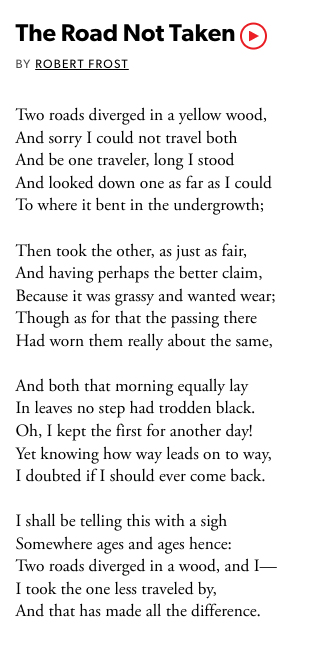
Otherwise no, I’ll remain here at home, content in my post-Covid hermetically sealed hermitage, and without any further reason to do pilgrimming. The road is not taken. The road is less travelled. The yellow arrows are only followed in my mind. And on a sensible day, the yellow arrows lead me into the kitchen, to prepare a good meal, thus appreciating God’s creation.